



Blog Details
Blog details
 admin admin
 The role of Artificial Intelligence in procurement remains a central debate among industry leaders. While proponents view AI as a transformative driver of operational efficiency, skeptics contend that machine intelligence will never fully replicate human judgment. Although procurement-focused AI technology is still evolving, its ability to streamline core workflows merits a closer examination.
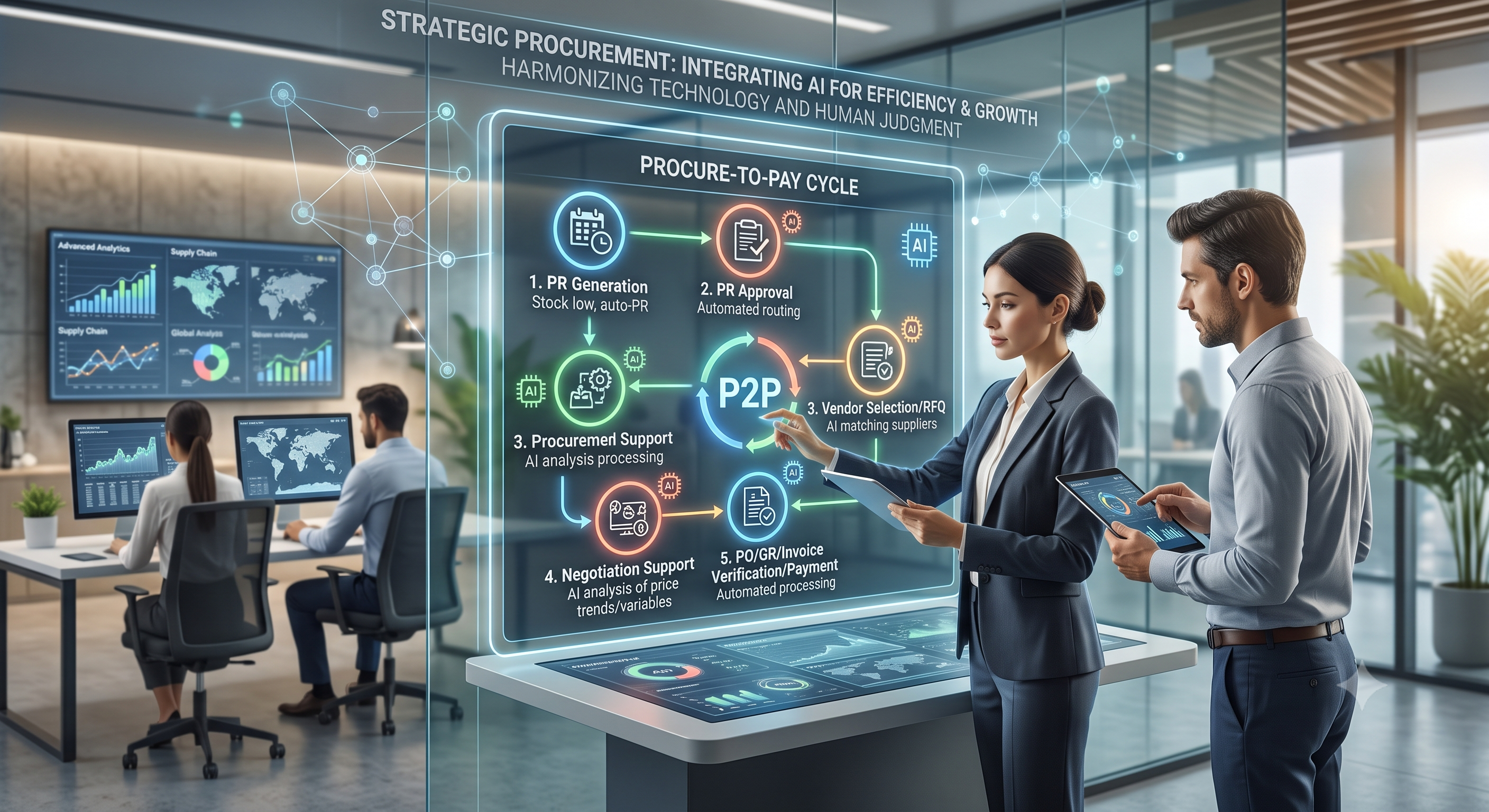
To understand AI's current impact, we can examine its application across the traditional Procure-to-Pay (P2P) cycle:
- Purchase Requisition (PR) Generation: Integrated with inventory management systems, AI automatically generates PRs when stock levels breach predefined minimum thresholds.
- PR Approval Workflows: Rules-based AI routes requests efficiently, mitigating bottlenecks in standard approval chains.
- Vendor Selection & RFQ Distribution: Leveraging historical procurement data, AI identifies optimal suppliers for Request for Quotation (RFQ) generation and offer collation.
- Price Analytics & Negotiation Support: By evaluating market trends, raw material index movements, and historical purchasing data, AI provides predictive pricing models to guide buyer negotiations.
- PO Awarding, GR, & Invoice Reconciliation: Downstream tasks—including Purchase Order creation, Goods Receipt processing, and three-way invoice matching—are already widely automated through mature AI and RPA tools.
The Current Limits of AI
While AI handles high-volume, transactional procurement effectively, its capabilities diminish in high-complexity environments. Large-scale industrial manufacturing, multi-tiered service contracts, and strategic sourcing require human oversight. Critical activities such as complex contract drafting, nuanced commercial negotiations, supplier audits, and relationship management still depend heavily on human intuition and strategic due diligence.
Conclusion
Whether AI will eventually match human decision-making in complex sourcing remains to be seen. At present, the most effective procurement strategies treat technology and human expertise as complementary forces rather than competing ones.
Leave a reply
LATEST BLOG